
Our vision

Groupe Ordinata’s vision for Quebec SME leaders
By 2029, Groupe Ordinata wants Quebec SME leaders to think and make decisions with AI. We also want their businesses to run on reliable systems rather than on a few key people. In these businesses, AI takes on the repetitive work so that people can focus on what calls for judgment. Every project starts with a measurement, so we know where we are starting from.
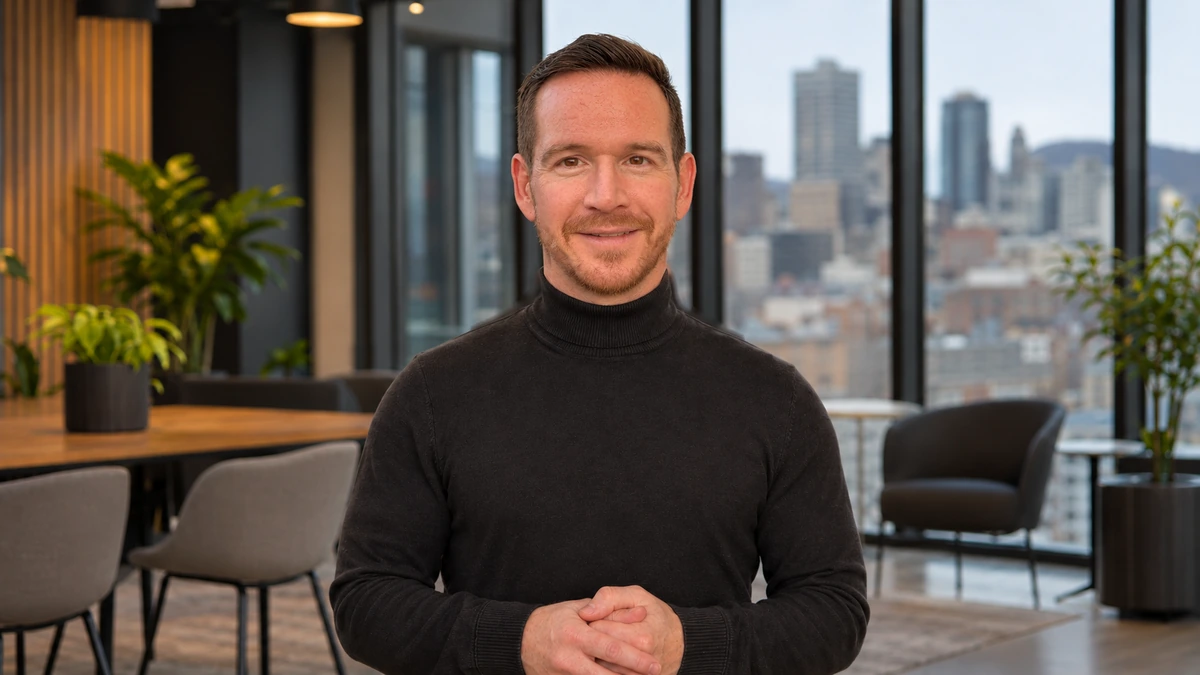
I have been developing software since 2001. For fourteen years, I led teams that built machine vision systems for sawmills, where a system has to work on every cycle. I founded Groupe Ordinata to bring that rigour to Quebec SMEs, at a time when AI is changing how people work. This page says where we are going, so you know who you are dealing with.
Mathieu Brassard, founder of Groupe Ordinata
The leader comes first
An SME changes when its leader changes, so our work starts with the person who makes the decisions. They learn to use AI as a thinking partner. This partner helps them clarify a goal, see options they had not considered and spot risks before deciding. In this exchange, AI asks questions, is not afraid to push back and makes proposals, but the leader is always the one who weighs it all and decides. A leader who knows how to work with AI this way also knows what to ask of their team and their tools.
A business that no longer depends on a few key people
In many SMEs, part of the know-how lives in the heads of two or three people, and everything slows down when one of them is away. We want businesses whose ways of working are written down, measured and handed to reliable systems. These systems sort the email, enter the invoices, answer the calls and produce the reports. Key people remain essential, but the business no longer depends on them alone.
Less repetitive work and more judgment for people
AI should help people in their work without replacing them. It takes on what repeats, such as copying, filing, following up or summarizing. People keep what calls for judgment, such as advising a client, solving a problem or deciding what comes next. We involve teams from the start and we build on their ideas. Each person sees what the tool changes for them.

Groupe Ordinata’s values
This vision rests on five values that guide our decisions and our business relationships.
- Candour. We say clearly what we intend to do and we speak directly, with nothing left unsaid.
- Integrity. We accept no grey areas and no conflicts of interest, and we stay independent in what we recommend.
- Passing on knowledge. We share our methods and our tools so that your teams become autonomous.
- Pragmatism. A decision is judged by its real effect on the ground. We look for concrete results, with less friction in day-to-day work.
- Family and balance. Time with family is not negotiable. We also protect time to disconnect, because it lets people work well over the long run.
Four commitments on the risks of AI
AI carries real risks. We manage them with our clients, through four commitments.
- Measure before automating. No project starts without a baseline, meaning how long the task takes today and how often it comes back. No measurement, no promise.
- Protect your data. Tool accounts are opened in your company’s name. We tell you which providers process your data and where it is processed, sometimes outside Canada, notably in the United States. The use of your data to train models is turned off. Quebec’s Law 25 is handled at the start, not at the end.
- Leave the decision to a person. AI proposes, challenges and prepares the work, but the decision and the responsibility stay with a person on your team.
- Say what AI does not do. When AI is not the right answer, we say so, even if it means less work for us.
How this vision was written
We wrote it the way we teach our clients to work. Mathieu Brassard used the CRIT method that Geoff Woods describes in his book The AI-Driven Leader. It comes down to four steps. You give the context and assign AI a role. You then let it interview you, one question at a time, and finally give it the task. The AI asked three questions, one about the business, one about people and one about risks. Mathieu chose the answers. He then reviewed and edited the text. You can try the method with our AI prompt tool, which prepares this kind of prompt in two minutes.
Frequently asked questions about Groupe Ordinata’s vision
What is Groupe Ordinata’s vision?
Groupe Ordinata’s vision is that, by 2029, Quebec SME leaders think and make decisions with AI. Their businesses should also run on reliable systems instead of a few key people. AI frees people from repetitive work without replacing them.
Why start with the leader before the technology?
Because strategy comes before the tool. A leader who can think and decide with AI makes better choices about what to automate, in what order and why. Without the leader, an AI project stays an isolated experiment.
How does Groupe Ordinata manage the risks of AI?
Groupe Ordinata manages the risks of AI through four commitments. It measures before automating and protects data in accounts held in the client’s name. It leaves the decision to a person and says plainly when AI is not the right answer.